A trigger point is described as “a focus of hyperirritability in a tissue that, when compressed, is locally tender and, if sufficiently hypersensitive, gives rise to referred pain and tenderness” (1). The most commonly reported trigger points are located in the muscles of the shoulder region (trapezius muscle) and the lower back (quadratus lumborum muscle) (1).
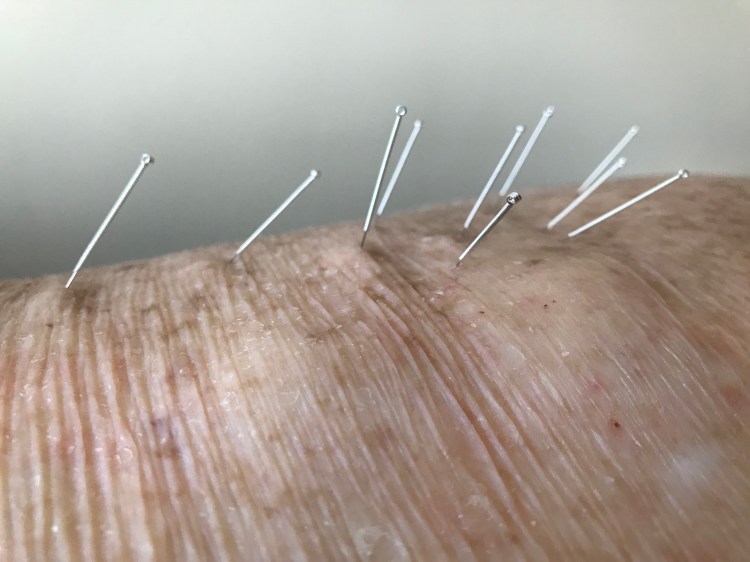
Treatment involves the deactivation of the trigger point, which can be achieved through various methods. One manual method entails applying firm digital pressure, alternating between pressure and release for up to 2 minutes. This pressure is believed to create local ischemia, inhibiting the neural activity that maintains the reflex, thereby causing the associated taut band to release (2). Alternatively, muscle release can also be achieved by inserting very fine needles (e.g., 0.25 mm diameter) into the trigger point, which may help alleviate symptoms.
1. Travell JG, Simons DG. Myofascial pain and dysfunction: the trigger point manual, vol 2. Baltimore: Williams and Wilkins; 1992
2. Parsons, J. and Marcer, N. Osteopathy—Models for diagnosis, treatment and practice, Elsevier, Churchill Livingstone; 2005
